
You did everything right. You watched the YouTube video. You measured the flour. You even bought the fancy yeast. And when you pulled that dough out of the oven, it came out like a cracker — or worse, a dense, gummy disc that could stop a bullet.
Here’s the thing: most pizza dough recipes online are written by food bloggers, not pizza operators. They’re technically correct the way a Wikipedia article is technically correct — but they skip the stuff that actually matters. The real knowledge lives in the kitchen, not on a recipe card.
I’ve made thousands of doughs across three pizzerias. I’ve seen every failure mode there is. And the problems that tank your homemade dough? They’re almost always the same five things. Let’s go through them.
The Real Reasons Your Dough Is Failing
1. You’re Not Giving It Enough Time to Proof
This is the big one. The one that kills more home pizza attempts than anything else.
Most recipes say “let rise for 1–2 hours.” That’s not enough. That’s barely enough to get the yeast going. Real pizzeria dough — the kind that gives you those gorgeous bubbles and a chewy, airy crumb — proofs for a minimum of 24 hours. Most of ours goes 48 to 72 hours cold fermented in the walk-in.
Cold fermentation does something a 90-minute countertop rise can’t: it lets the enzymes in the flour break down the starches slowly, developing flavor and structure that you simply cannot rush. Fast dough tastes like fast dough.
The fix: Make your dough 2–3 days before you plan to use it. Mix it, ball it, throw it in the fridge. Pull it out 2 hours before you stretch it. That’s the single biggest upgrade you can make.
2. You’re Using the Wrong Flour
All-purpose flour is fine for cookies. For pizza? It’s a compromise.
Pizza dough needs gluten — a strong, extensible gluten network that can stretch thin without tearing and hold its shape in a screaming hot oven. All-purpose flour has around 10–12% protein. It’ll work, but it won’t sing.
The two worth knowing: 00 flour for Neapolitan-style, bread flour for New York-style. These are what I’ve landed on after a lot of trial and error.
For Neapolitan-Style (Wood-Fired, High Heat)
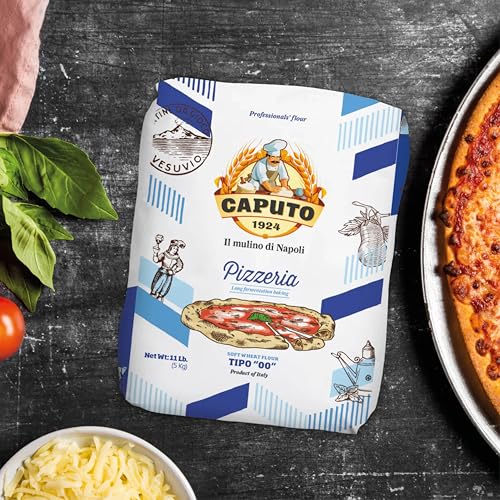
Our Pick · Neapolitan-Style
Antimo Caputo Pizzeria Flour Blue — 11 lb
The industry standard for serious home bakers and professional pizzerias alike. Ultra-fine 00 mill, elastic dough, gorgeous char at high heat.

Also Excellent · Neapolitan-Style
Le 5 Stagioni Pizza Napoletana 00 Flour — 2.2 lb
From an Italian mill with over 200 years behind it. A great alternative to Caputo if you want to experiment — the 2.2 lb size is perfect for testing.
For New York-Style (Home Oven, Standard Temps)
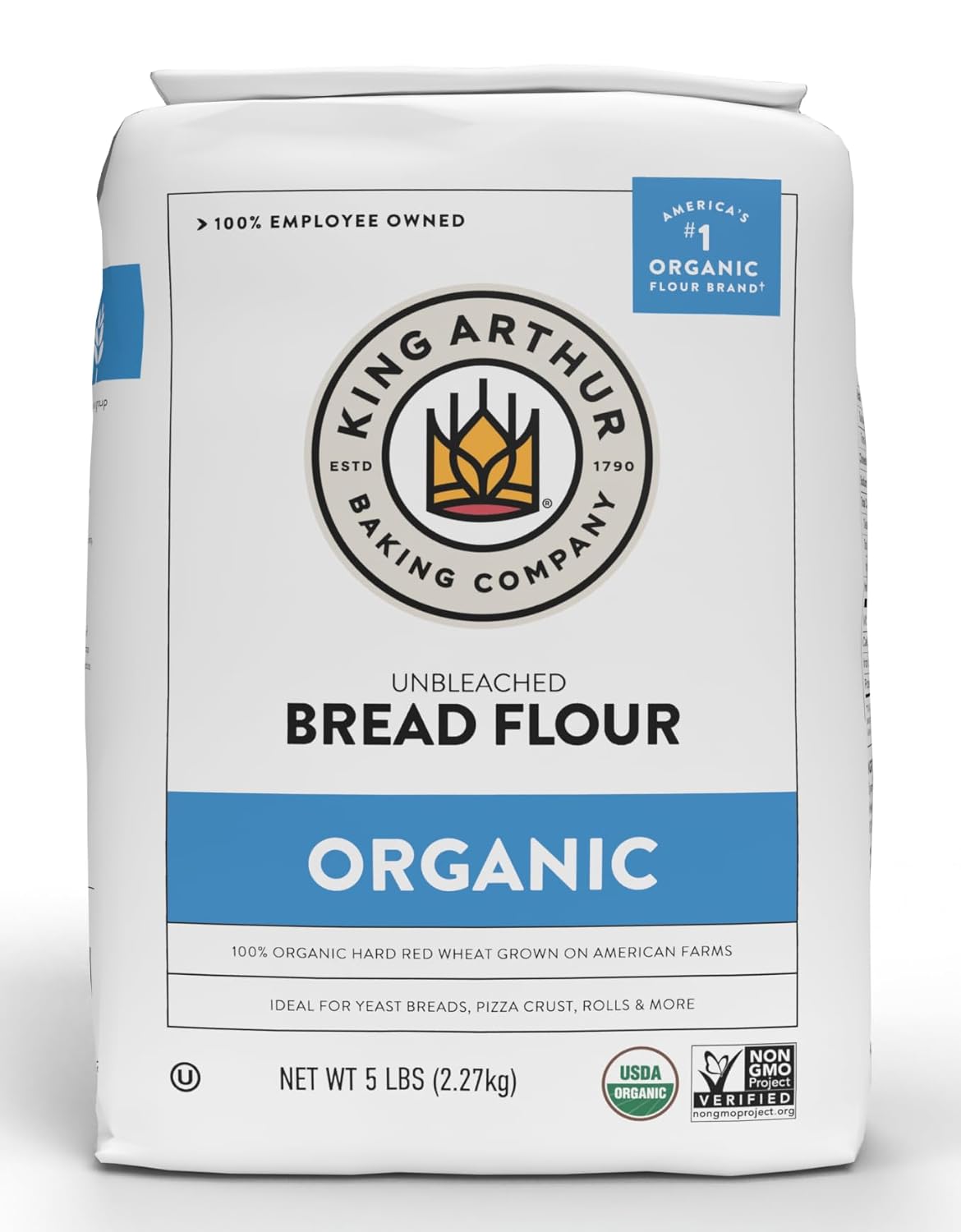
Our Pick · New York-Style
King Arthur 100% Organic Bread Flour — 5 lb
12.7% protein, consistent bag to bag, certified organic and non-GMO. The most reliable bread flour you can buy without special-ordering.

Also Excellent · New York-Style
Central Milling Organic Pizza Flour — 5 lb
One of America’s oldest flour mills. Grown on family farms, milled clean. A great domestic option if you want something sourced closer to home.
If you’re doing a home bake in a standard oven, bread flour is actually your best bet. It tolerates a longer bake time better than 00, which is optimized for 800°F+ Neapolitan conditions.
3. Your Hydration Is Off
Hydration is the ratio of water to flour by weight. Most novice home recipes run around 55–60% hydration. Most professional Neapolitan doughs run 62–70%.
Higher hydration = more open crumb, more bubbles, better texture. It also means stickier, harder to handle dough — which is why recipes water it down for beginners. The problem is that lower hydration dough bakes up dense and dry.
The fix: Work up to 65% hydration. Use a kitchen scale — volume measurements are unreliable. Here’s a solid baseline:
- 500g bread flour
- 325g water (65% hydration)
- 10g salt
- 3g active dry yeast (or 1g instant if cold fermenting)
- 10g olive oil (optional)
4. You’re Killing the Yeast (Or It Was Already Dead)
Water temperature matters. Yeast dies above 140°F and goes dormant below 40°F. The sweet spot for activation is 100–110°F — warm, but not hot.
Test your yeast before committing: dissolve it in warm water with a pinch of sugar. After 10 minutes, it should be foamy. No foam = dead yeast = flat dough.
5. You’re Stretching It Wrong
Never use a rolling pin on pizza dough. A rolling pin degasses the dough — it crushes all those CO2 bubbles you spent two days building. You’ll get a flat, cracker-like crust with zero chew.
Stretch by hand. Start at the center, work outward with your fingertips, and use gravity — drape it over your knuckles and let it hang. If your dough keeps snapping back, it’s too cold. Let it rest on the counter for another 20–30 minutes and try again.
Pro Tips from the Restaurant Floor
Use a Stand Mixer — But Don’t Over-Mix
Mix on low for 2 minutes, then medium for 6–8 minutes until the dough clears the bowl sides and is smooth and slightly tacky. Over-mixing tears the gluten structure. Under-mixing leaves it shaggy.
Ball Tight, Rest Covered
Pull the surface tight when portioning — tuck and rotate, like folding the bottom of a balloon. Cover with plastic wrap or individual dough containers. Exposed dough dries out and forms a skin that tears during stretching.
Flour Your Surface, Not Your Dough
Too much flour on the dough changes the skin texture and leads to a dry, papery crust. A light dusting on the counter or peel is all you need.
Preheat Your Stone or Steel for Longer Than You Think
Home ovens cycle temperature unevenly. A pizza stone or steel needs at least 45–60 minutes at max temp to be fully saturated with heat. Set your oven to max, throw your stone on the top rack, and walk away for an hour. Then bake.
Want to Go Deeper?
If this sparked something, there’s one book I recommend above everything else:

Recommended Reading
The Pizza Bible — Tony Gemignani
12-time world pizza champion. Every major style covered — Neapolitan, NY, Detroit, Sicilian, deep dish, wood-fired. The one book worth owning if you’re serious about this.
The Bottom Line
Making good pizza dough at home isn’t hard — but it requires you to stop treating it like a same-day project. Cold ferment for 48 hours. Use the right flour. Hit 65% hydration. Don’t use a rolling pin. Give your oven time to heat.
You’ve been doing it the fast way. Try the right way. The difference will embarrass every pizza you’ve made before.
Have a specific dough problem? Drop it in the comments — I’ve probably broken it the same way.
Affiliate disclosure: Some links in this post are Amazon affiliate links. If you buy through them, we earn a small commission at no extra cost to you. We only recommend things we’d actually use ourselves — or already have.
 Insider Pizza